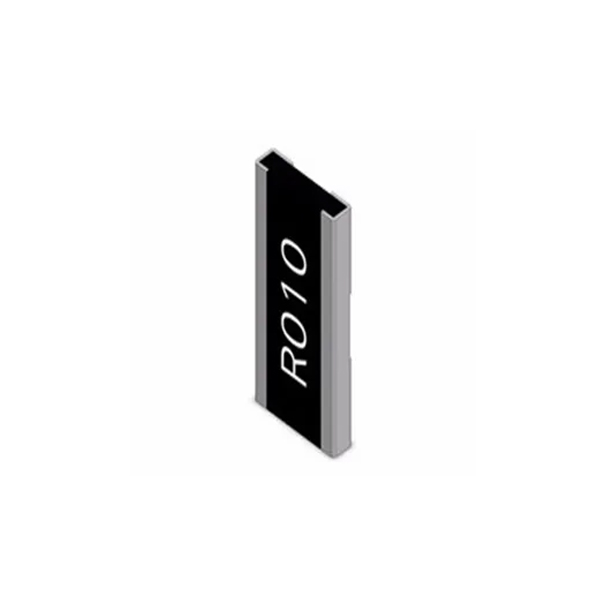
It is currently the largest and most widely used SMD resistor in terms of production, and commonly referred to as ordinary SMD resistors are mostly thick film resistors.
Features:
1. Extremely low cost: mature technology, cheap materials, suitable for large-scale SMT production
2. Wide resistance range: 1 Ω~10G Ω, covering the vast majority of circuit requirements
3. Wide power adaptability: 0402 (1/16W)~2512 (1W), high-power models can reach several watts
4. Moderate accuracy: standard ± 1%/± 5%, high-precision type can reach ± 0.5%
5. Temperature coefficient (TCR): Normal ± 100~± 400ppm/℃
6. Heat resistance/surge resistance: Ceramic substrate has good heat dissipation and strong resistance to pulse current impact
7. Standardization of dimensions: 0402/0603/0805/1206/1210/2010/2512, etc
Applications:
1. Consumer electronics: mobile phones, computers, televisions, headphones, power adapters (voltage divider, current limiting, decoupling)
2. Industrial control: PLC, frequency converter, servo drive, power module (temperature resistant, anti-interference)
3. Automotive electronics: ECU, OBC, headlights, sensors (high temperature resistance, vibration resistance, high reliability)
4. Communication equipment: base station, router, optical module (high stability, sulfur resistance)
5. LED lighting: driver power current limiting, light string current equalization (high power, long life)
6. Home appliances/security: air conditioners, refrigerators, surveillance cameras (cost sensitive, universal scenarios)