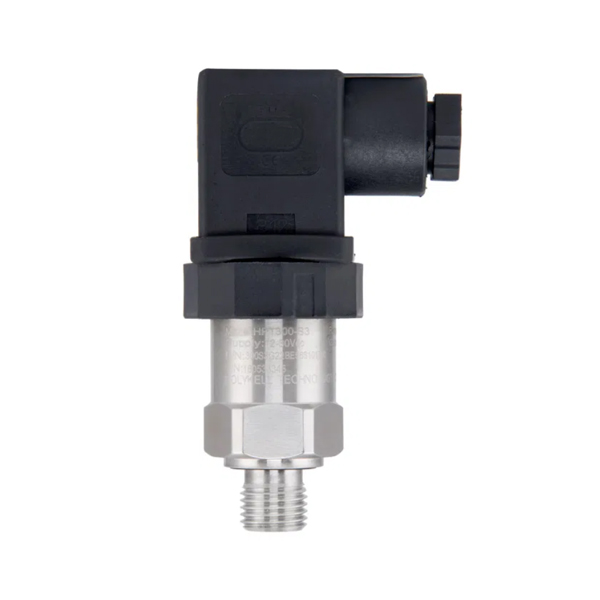
MEMS (Micro Electro Mechanical System) sensor is a micro device that integrates micro mechanical structures, sensors, actuators, and signal processing circuits on the same chip using semiconductor microfabrication technology. Its core characteristics are small size, light weight, low power consumption, low cost, high reliability, and easy mass production. It can convert physical signals such as pressure, acceleration, angular velocity, sound, magnetic field, etc. into electrical signals to achieve accurate measurement.
Features:
1. Miniaturization: The size is usually in the millimeter or even micrometer range, and the weight is extremely light.
2. Low power consumption: The working current is mostly microampere level, suitable for battery powered equipment.
3. Low cost: capable of mass production, good consistency, and extremely low unit price for large-scale applications.
4. High integration: easy to integrate with signal processing circuits MCU、 Single chip integration of wireless modules and other components.
5. High reliability: Silicon materials have excellent mechanical properties, no mechanical wear, and strong seismic and anti-interference capabilities.
6. Multi parameter sensing: can integrate multiple sensors (IMU) such as acceleration, gyroscope, magnetometer, pressure, etc. on a single chip
Applications:
1. Inertial sensors (accelerometer, gyroscope, IMU)
Principle: Use capacitance or piezoresistive effect to detect the displacement of internal mass blocks.
Application: Consumer electronics: mobile screen rotation, pedometer, VR/AR posture tracking, camera stabilization.
Automobile: airbag triggering, body stability system (ESP), tire pressure monitoring.
Industrial/Aviation: Drone Navigation, Robot Balancing, Inertial Navigation Systems (INS).
2. Pressure sensor
Principle: Pressure causes the silicon diaphragm to deform, changing its internal resistance or capacitance.
Application:
Automobile: Engine intake pressure, tire pressure monitoring (TPMS).
Medical: blood pressure monitoring, ventilator pressure control.
Industry: Process control, liquid level measurement.
3. Microphone (MEMS Mic)
Principle: Sound pressure causes the micro diaphragm to vibrate, changing its capacitance and outputting an electrical signal.
Applications: Smartphones, TWS earphones, smart speakers, laptops.
4. Magnetometer (electronic compass)
Principle: Detect changes in magnetic field and measure direction.
Applications: Mobile navigation, drone orientation, outdoor handheld devices.
5. Micro mirror (optical MEMS)
Principle: Electrostatic driven micro lens deflection.
Applications: LiDAR, projectors, optical communication switches